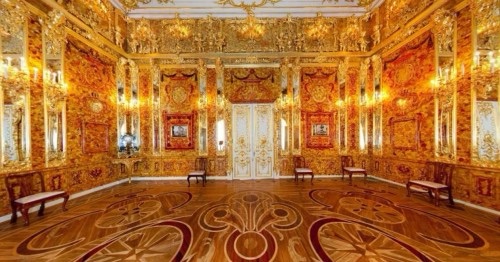
La Camera d’Ambra, una delle più famose e misteriose opere d’arte perdute della storia, continua a incantare e confondere gli storici e i cacciatori di tesori. Creata nel XVIII secolo per il re prussiano Federico I, questa stanza straordinaria era decorata con diversi pannelli d’ambra, foglie d’oro e specchi. Originariamente situata nel Palazzo di Charlottenburg a Berlino, fu poi spostata nel Palazzo d’Inverno di San Pietroburgo e infine nel Palazzo di Caterina a Tsarskoe Selo, vicino a San Pietroburgo.
La sparizione della Camera d’Ambra avvenne durante la Seconda Guerra Mondiale, quando le truppe naziste, che avevano invaso l’Unione Sovietica, smantellarono e portarono via la stanza nel 1941. Si crede che sia stata trasportata in Prussia, ma dopo questo, le sue tracce si perdono nel caos della guerra.
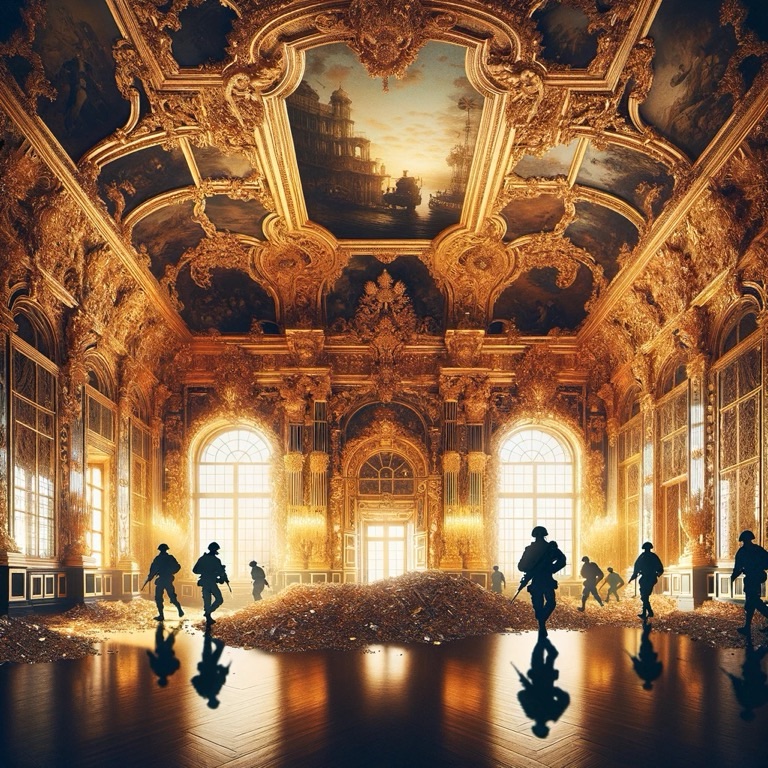
Da allora, la ricerca della Camera d’Ambra è diventata quasi una leggenda, con numerose spedizioni e ricerche effettuate in tutta Europa. Alcune teorie suggeriscono che sia stata nascosta in una miniera segreta, affondata in una nave nel Mar Baltico, o murata dietro false pareti in un castello sconosciuto, o addirittura che quella che vediamo nel Palazzo di Caterina a Pushkin, celi alla luce del giorno quella autentica.
Nonostante gli sforzi, nessuna mi traccia convincente della Camera d’Ambra è mai stata trovata, rendendola uno dei più grandi misteri irrisolti del XX secolo. Tuttavia, il fascino e il mistero che circonda la sua sparizione continuano a stimolare l’immaginazione di storici, ricercatori e appassionati di misteri in tutto il mondo.
The Amber Room, one of history’s most famous and enigmatic lost art treasures, continues to enchant and baffle historians and treasure hunters alike. Created in the 18th century for Prussian King Frederick I, this extraordinary room was adorned with several amber panels, gold leaf, and mirrors. Initially located in the Charlottenburg Palace in Berlin, it was later moved to the Winter Palace in St. Petersburg and eventually to the Catherine Palace at Tsarskoe Selo, near St. Petersburg.
The Amber Room’s disappearance occurred during World War II when Nazi troops, invading the Soviet Union, dismantled and removed the room in 1941. It is believed to have been transported to Prussia, but after that, its trail is lost in the chaos of the war.
Since then, the search for the Amber Room has become almost a legend, with numerous expeditions and searches conducted throughout Europe. Some theories suggest it was hidden in a secret mine, sunk in a ship in the Baltic Sea, or even walled behind false panels in an unknown castle. Or even that what we see in the Catherine Palace at Pushkin, hides the authentic one in plain sight.
Despite efforts, no convincing trace of the Amber Room has ever been found, making it one of the greatest unresolved mysteries of the 20th century. However, the allure and mystery surrounding its disappearance continue to stimulate the imaginations of historians, researchers, and mystery enthusiasts around the world
 grazielladwan
Lascia un commento