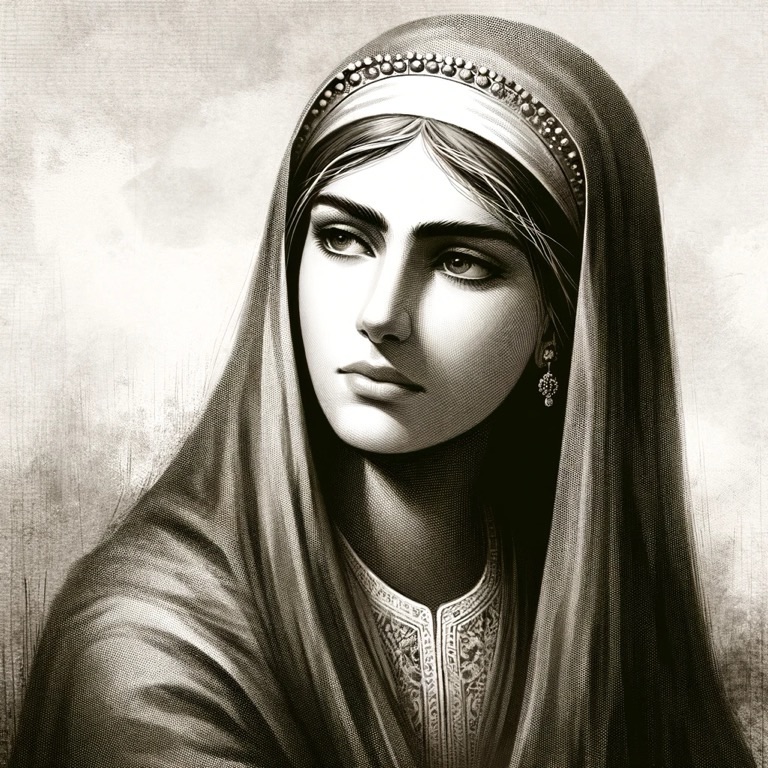
Nel panorama letterario della storia araba, poche figure brillano tanto intensamente quanto Al-Khansa, una poetessa vissuta nel periodo pre-islamico che ha lasciato un’impronta indelebile nella poesia araba.
Nata nel VI secolo in una tribù nomade, Al-Khansa, il cui vero nome era Tumadir bint Amr, si distinse per la sua straordinaria abilità poetica in un’epoca dove la poesia era una delle più alte forme di espressione culturale maschile.
Giovinezza e Inizio della Carriera
Cresciuta in una società tribale, Al-Khansa fu esposta fin dalla tenera età alla ricca tradizione orale della poesia araba. Si dice che abbia iniziato a scrivere poesie dopo la morte prematura di un fratello, esprimendo il suo dolore attraverso versi commoventi che riflettevano la perdita e il lutto. Questa capacità di catturare emozioni universali la rese celebre in tutta la Penisola Arabica.
La Maestria nella Qasida
La forma poetica che Al-Khansa eccelleva era la qasida, una forma di ode lunga che iniziava con l’espressione nostalgica dell’amore e del ricordo, per poi spostarsi su temi come il viaggio, l’eroismo e la saggezza. Le sue poesie erano note per la loro profondità emotiva, l’eleganza del linguaggio e l’intensità dei sentimenti. Il suo lavoro si concentrava spesso sul tema della morte e del lutto, riflettendo le perdite personali che aveva subito nella sua vita.
Il Riconoscimento e l’Eredità
Al-Khansa godette di grande stima durante la sua vita, tanto che si dice che il Profeta Maometto l’abbia lodata per la sua poesia. Dopo la sua conversione all’Islam, continuò a scrivere, sebbene la maggior parte delle sue opere post-conversione si concentrasse su temi islamici.
L’eredità di Al-Khansa è immensa. Viene spesso citata come una delle più grandi poetesse della letteratura araba, e le sue poesie sono studiate fino ad oggi per la loro bellezza e profondità emotiva. La sua capacità di esprimere il dolore e la tristezza in una forma così eloquente e potente la rende una figura unica nella storia letteraria.
Conclusione
Al-Khansa rimane un simbolo di resistenza e espressione artistica nell’antica Arabia. La sua opera sopravvive come testimone della ricchezza della cultura araba pre-islamica e come esempio della potenza della poesia di esprimere sentimenti universali. La sua vita e le sue opere continuano ad ispirare generazioni di poeti e amanti della letteratura in tutto il mondo arabo e oltre.

Al-Khansa: The Immortal Poetess of Pre-Islamic Arabia
In the literary landscape of Arab history, few figures shine as brightly as Al-Khansa, a poetess from the pre-Islamic era who left an indelible mark on Arabic poetry. Born in the 6th century into a nomadic tribe, Al-Khansa, whose real name was Tumadir bint Amr, distinguished herself with her extraordinary poetic talent in an era where poetry was one of the highest forms of cultural expression.
Early Life and Career Beginnings
Raised in a tribal society, Al-Khansa was exposed from an early age to the rich oral tradition of Arabic poetry. She is said to have begun writing poetry following the premature death of a brother, expressing her grief in moving verses that reflected loss and mourning. This ability to capture universal emotions made her famous across the Arabian Peninsula.
Mastery in Qasida
The poetic form in which Al-Khansa excelled was the qasida, a long ode that started with nostalgic expressions of love and remembrance, before moving to themes like journey, heroism, and wisdom. Her poems were known for their emotional depth, elegant language, and intense sentimentality. Her work often focused on themes of death and mourning, reflecting the personal losses she had suffered in her life.
Recognition and Legacy
Al-Khansa enjoyed great esteem during her lifetime, so much so that Prophet Muhammad is said to have praised her poetry. After converting to Islam, she continued to write, though most of her post-conversion works focused on Islamic themes.
Al-Khansa’s legacy is immense. She is often cited as one of the greatest poetesses in Arabic literature, and her poems are studied to this day for their beauty and emotional depth. Her ability to eloquently and powerfully express grief and sadness makes her a unique figure in literary history.
Conclusion
Al-Khansa remains a symbol of resilience and artistic expression in ancient Arabia. Her work survives as a testament to the richness of pre-Islamic Arabian culture and as an example of the power of poetry to express universal feelings. Her life and works continue to inspire generations of poets and literature lovers across the Arab world and beyond.

Grazielladwan
 grazielladwan
Lascia un commento