
La leggenda di Nera e Velino riguarda la formazione delle Cascate delle Marmore, uno spettacolare salto d’acqua situato in Umbria, Italia. Secondo la mitologia, la storia è incentrata su due personaggi principali: Nera, una ninfa bellissima, e Velino, un giovane pastore.
La storia racconta che Velino, innamoratosi perdutamente di Nera, venne respinto da lei. Disperato, Velino chiese aiuto agli dei, che trasformarono Nera in un fiume, il Nera appunto. Tuttavia, ciò non placò il dolore di Velino. In un atto finale di disperazione e amore eterno, Velino si gettò da un’alta scogliera, trasformandosi anch’esso in un fiume che si riversava nel Nera. Questo salto, secondo la leggenda, è l’origine delle Cascate delle Marmore.
Questa leggenda è un esempio di come antiche storie e miti siano stati spesso usati per spiegare la formazione di caratteristiche naturali straordinarie e per aggiungere un fascino romantico e misterioso a luoghi già di per sé suggestivi. Le Cascate delle Marmore sono infatti tra le più alte d’Europa e sono note per la loro bellezza mozzafiato.
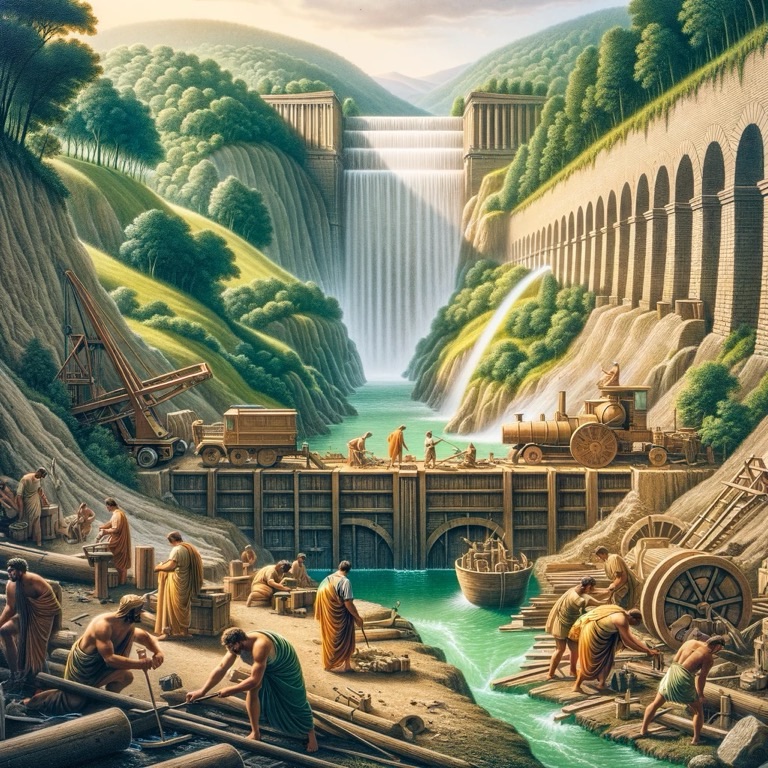
Le Cascate delle Marmore, situate in Umbria, Italia, hanno una storia che risale all’antichità e sono il risultato di un intervento ingegneristico piuttosto che di un processo naturale. La loro creazione è strettamente legata allo sviluppo della regione e alle necessità agricole dell’antica Roma.
La storia delle Cascate delle Marmore inizia nel 271 a.C., quando i Romani costruirono il “Cavo Curiano”, un canale progettato per drenare le acque paludose della piana di Rieti. Questo progetto fu realizzato sotto il console romano Manio Curio Dentato. L’obiettivo era quello di rendere la terra più fertile e adatta all’agricoltura, ma il drenaggio causò anche problemi di inondazione a valle, vicino a Terni.
Nel corso dei secoli, sono stati effettuati vari tentativi di modificare e migliorare il sistema di drenaggio per controllare meglio il flusso delle acque. La forma attuale delle cascate, tuttavia, è il risultato di un progetto del 16° secolo, voluto dai Papi. Nel 1545, Papa Paolo III commissionò un ulteriore lavoro di ingegneria, portato avanti dall’architetto Antonio da Sangallo il Giovane, per migliorare il flusso del fiume Velino e ridurre l’impatto delle inondazioni.
La modifica più significativa avvenne nel 1598, sotto Papa Clemente VIII, che ordinò la costruzione di un nuovo canale, il Cavo Gregoriano, per ridurre ulteriormente le inondazioni. Questa modifica determinò l’aspetto attuale delle cascate, con il fiume Velino che si precipita spettacolarmente nel fiume Nera da un’altezza di circa 165 metri, creando una delle cascate più alte d’Europa e un’attrazione turistica di grande interesse paesaggistico e storico.
*The Legend of Nera and Velino*
The legend of Nera and Velino concerns the creation of the Marmore Falls, a spectacular waterfall located in Umbria, Italy. According to mythology, the story centers around two main characters: Nera, a beautiful nymph, and Velino, a young shepherd.
The tale narrates that Velino, deeply in love with Nera, was rejected by her. In despair, Velino sought the help of the gods, who transformed Nera into a river, the Nera. However, this did not soothe Velino’s pain. In a final act of desperation and eternal love, Velino threw himself from a high cliff, turning into a river that cascaded into the Nera. This leap, according to legend, is the origin of the Marmore Falls.
This legend exemplifies how ancient stories and myths were often used to explain the formation of extraordinary natural features and to add a romantic and mysterious allure to places that are already suggestive. The Marmore Falls are indeed among the tallest in Europe and are known for their breathtaking beauty.
*The Historical Creation of the Marmore Falls*
The Marmore Falls, located in Umbria, Italy, have a history dating back to antiquity and are the result of engineering intervention rather than a natural process. Their creation is closely linked to the development of the region and the agricultural needs of ancient Rome.
The story of the Marmore Falls begins in 271 B.C., when the Romans constructed the “Cavo Curiano,” a canal designed to drain the swampy waters of the Rieti plain. This project was undertaken under the Roman consul Manius Curius Dentatus. The aim was to make the land more fertile and suitable for agriculture, but the drainage also caused flooding problems downstream, near Terni.
Over the centuries, various attempts were made to modify and improve the drainage system to better control the water flow. However, the current form of the falls is the result of a 16th-century project, commissioned by the Popes. In 1545, Pope Paul III ordered further engineering work, carried out by the architect Antonio da Sangallo the Younger, to improve the flow of the Velino river and reduce the impact of floods.
The most significant modification occurred in 1598, under Pope Clement VIII, who ordered the construction of a new channel, the Cavo Gregoriano, to further reduce flooding. This modification determined the current appearance of the falls, with the Velino river dramatically plunging into the Nera river from a height of about 165 meters, creating one of Europe’s tallest waterfalls and a tourist attraction of great scenic and historical interest
 grazielladwan
Lascia un commento